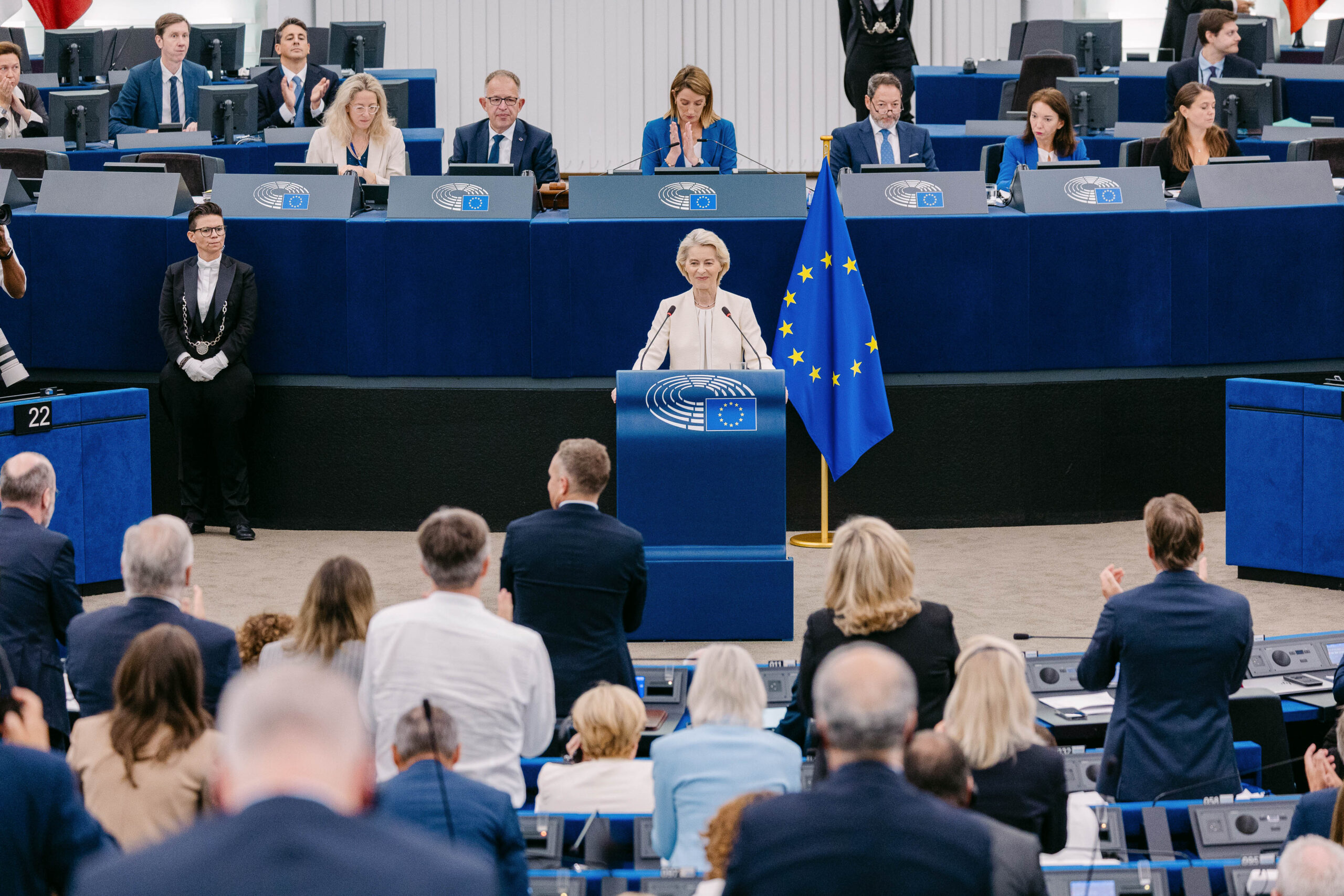
In the State of the Union address on 16 September 2026, Ursula von der Leyen made genuinely important commitments: putting people first, protecting job security, housing, dignity. She acknowledged that democracy means giving people power over the society they live in. And she highlighted AI’s transformative potential in public health, citing breast cancer screening.
These are exactly the right priorities. But there was a notable absence in her vision.
One in two Europeans will develop cancer in their lifetime. 2.7 million new cases a year. 1.9 million deaths. Cancer is set to become Europe’s leading cause of death by 2035. Notably, in the State of the Union, health did not feature prominently in the speech. And civil society, the organisations representing people, patients and the public health field, didn’t feature either.
Von der Leyen spoke about democracy as giving people power over the society they live in. For this vision to work in practice, civil society needs to be part of shaping policy. However currently, civil society organisations working on public health lack the resources they need to engage meaningfully in these conversations. If we want to hear from patients and the public health field about their needs, we need to ensure they have the capacity to be at the table.
This is precisely why partnership with civil society is essential for AI in healthcare. Von der Leyen is absolutely right that AI can transform cancer care. AI-supported mammography can identify cancers earlier and more accurately. AI models can analyse epidemiological datasets to identify emerging risk patterns. Early detection through AI-supported diagnosis can save lives, boost survival rates, and spare patients needless suffering. At ECL, we know that AI will be transformative far beyond screening; in treatment design, symptom management, personalised follow-up, digital self-management support.
The impact of artificial intelligence will depend entirely on how it is designed and deployed. Ensuring that policymakers design it to work equitably is utterly important.
Consider the current reality. Breast cancer screening participation across Europe ranges from over 80% in some countries to less than 10% in others. Women with the lowest education and income, living in rural areas, participate significantly less. An estimated two-fold variation exists in breast cancer incidence and mortality rates across EU member states. This is the baseline: profound inequity, despite decades of screening guidelines.
If we introduce AI into this landscape without robust ethical and equity safeguards, we risk amplifying these inequalities. AI could concentrate diagnostic power in wealthy regions with the infrastructure to deploy it, further leaving behind the communities that are already left behind. But this is not inevitable, it depends on how policymakers and stakeholders design the framework. This is why we believe that civil society must be a genuine partner from day one.
Patient organisations, cancer leagues, health researchers, community advocates, we know what equity looks like in practice. We understand the barriers patients face. We can stress-test policy proposals against real-world complexity. Civil society can ensure that AI governance frameworks are built with equity as a non-negotiable foundation, not as an afterthought. We can advise on the ethical dimensions of AI in healthcare: transparency, accountability, informed consent, fairness. We can translate evidence into solutions that work for all people, not just some.
In November, as mentioned in the State of the Union, the Commission will launch a major AI initiative across health and other sectors, inviting member states, MEPs, industry and entrepreneurs to join. At ECL, we welcome this initiative and believe it will be stronger if it includes civil society at the design table from the outset. Not being consulted after decisions are made, but genuinely co-designing the framework. For this to succeed, equity safeguards must be built into AI governance from day one. And the resources to enable civil society to participate meaningfully should be part of the plan.
Von der Leyen said that Europe is “a Union for the people.” As civil society, we’re ready to contribute our expertise to help ensure that as AI develops in healthcare, it remains ethical and equitable. We look forward to working with the Commission on this and working together towards the end of cancer.
Dr. Wolfgang Fecke
Executive Director, ECL